
By Thulani Dube, Head of Innovation and Advancement – Cornerstone Institute
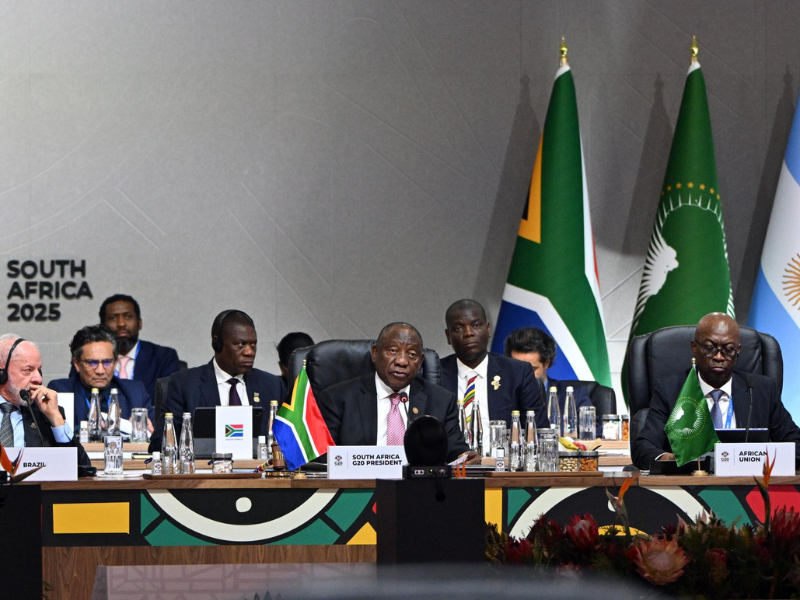
When South Africa hosted the 2025 G20 Leaders Summit, the world experienced more than an important diplomatic gathering. This historic 20th G20 summit may be viewed as a moment of global self reflection that took place on African soil and was guided by the principles that have long defined the continent’s moral compass. The principles of Ubuntu. At the centre of this historic convening was an urgent call to rethink how leadership is exercised in a world marked by fracture, inequality, and a rapid rate of change.
For senior leaders in organisations, emerging leaders navigating their career paths, and South African citizens in general contending with the weight of inequality in daily life, the summit offered profound lessons about what leadership must look like going forward.
It is fitting that South Africa anchored the summit in the philosophy of Ubuntu, focusing on solidarity, equality and sustainability to drive the agenda of global cooperation. This focal point is a strong reminder that humanity is interdependent and that progress requires deep mutual responsibility.
Anchoring Leadership In The Principle of Ubuntu
The G20 Leaders Declaration emphasised that no country can thrive in isolation and that global stability depends on a shared sense of humanity and collective care.This, for leaders in any setting, signals the importance in how leadership should be understood in organisations and societies. We live in a world where systems are increasingly interconnected, from supply chains to digital networks to financial markets. Leadership that fails to recognise interdependence quickly becomes obsolete. Ubuntu prompts leaders to recognise that resilience and success is not achieved through isolation or individual brilliance, but through relational strength, collaborative practice and the understanding that one person’s progress is intertwined with another’s, as echoed in the Zulu phrase “Umuntu ngumuntu ngabantu” – I am because we are.
Confronting Inequality As A Structural, Global and Leadership Driven Challenge
The emphasis on Ubuntu naturally connects to one of the most defining themes of the summit which is the urgent need to confront inequality as a structural, global and leadership driven challenge. The Global Inequality Report prepared for the G20 by a committee of independent experts on inequality put forward that extreme inequality is not an inevitable outcome of global economics, but rather the consequence of policy choices and leadership decisions that can be reversed with genuine political will.. According to the analysis, 83% of countries today exhibit high income inequality, with Gini coefficients exceeding 0.4.The report also found that more than 2.3 billion people face food insecurity, and climate instability disproportionately harms those already most vulnerable.
For South African leaders, these global statistics hit extremely close to home. South Africa remains one of the most unequal countries on earth. Inequality seems embedded into everything, from the labour market to organisational culture to youth employment prospects to community wellbeing and even national cohesion. The G20’s insistence that inequality is a leadership problem and not simply a statistical reality offers direction for business executives, educators, policymakers and civic leaders.
Leaders cannot hope to steward institutions into the future without confronting the inequalities embedded within those institutions. Pay disparities, representation gaps, unequal access to skills, and exclusionary cultures are not matters on the margins. Leaders must understand that these issues are foundational risks that weaken trust, erode performance and destabilise long term viability in organisations and beyond. The G20’s call for the establishment of an International Panel on Inequality, a body envisioned to track global inequality trends, evaluate policy impact and consolidate evidence, reinforces the idea that confronting inequality requires sustained institutional mechanisms rather than episodic good intentions. An indication to leaders on the importance of data driven decision making.
Reaffirming The Importance of Multilateralism and Collaboration
The summit affirmed that, in moments of crisis, leadership must move beyond unilateralism and the belief in national exceptionalism. The gathering of Global Leaders unfolded amidst geopolitical tensions, economic fragmentation, war and climate shocks. However in the midst of all these issues the Leaders’ Declaration reaffirmed an unwavering commitment to multilateral cooperation, peaceful conflict resolution and collaborative problem solving even among countries whose interests are divergent. In a world where crises increasingly transcend borders, the lesson for organisational leaders is clear in that collaboration is not optional. It is essential. As much as countries must navigate competing priorities to solve global challenges, organisational leaders must find ways to align diverse stakeholders such as boards, employees, clients, regulators and communities toward a shared purpose. Leadership in times of crisis, as the summit demonstrated, is a collective act. It requires early warning systems, integrated planning, shared intelligence and a willingness to build coalitions that extend beyond one’s immediate sphere of influence.
Highlighting Economic Transformation, Sustainable Industrialisation, Equitable Knowledge Sharing
Throughout the summit, there was a consistent message that economic transformation must take precedence over narrow conceptions of growth. The G20 made it clear that growth for its own sake is no longer adequate. Instead, nations must invest in industrialisation that promotes value addition, sustainability, and fair inclusion in global supply chains. The Leaders’ Declaration emphasised the need for local value creation, expanded participation of developing countries in global trade and the integration of social protection with economic strategy. For South African leaders, both in business and government, this carries deep relevance.
The nation has historically exported raw materials while importing finished products. To embrace the spirit of the G20 commitments means reimagining the country as a site of innovation, manufacturing, creativity and technological advancement rather than simply a source of unprocessed resources and cheap labour. Economic transformation that ignores labour rights, fair wages, and safe working conditions is no longer defensible. Sustainable industrialisation is inseparable from social upliftment. Leadership must take on the stance of serving.
Another major theme emerging from both the summit and the inequality report is the need for radical collaboration and equitable knowledge sharing. The Global Inequality Report argued strongly for the reform of global access to knowledge, and a more level playing field in global competition policy. The call is to build a world where information and innovation are not concentrated in a handful of wealthy countries or corporations but shared in ways that uplift broader humanity. This principle applies just as powerfully to organisations. Leadership in the 21st century requires moving away from siloed information cultures and towards systems that reward openness, cross disciplinary collaboration, evidence based decision making and collective innovation.
As Africa continues to grapple with technological dependency and digital exclusion, the G20’s focus on technology transfers, skills development and the strengthening of local innovation ecosystems signals a path forward. Leaders who invest in knowledge equity , who ensure that learning, development, data and research capabilities are distributed rather than centralised are building institutions that are more resilient, agile and future ready.
Recognising Human Dignity As A Core of Development
Across every thematic area of the summit, the human experience remained deeply central. The inequality report noted the enormous human cost of inequality which are hunger, unemployment, inadequate healthcare, climate vulnerability, unsafe living conditions and limited mobility, all of which reinforce a cycle of exclusion that is difficult to break. The G20’s commitment to poverty reduction, food security, disaster preparedness, adaptive social protection and expanded access to health services shows that people cannot be treated as beneficiaries of development but rather they must be regarded as full stakeholders in the decisions that impact their lives.
This carries a powerful leadership lesson in that human dignity must sit at the core of development. Compassion and data must work together. Evidence without empathy becomes technocratic and alienating. Empathy without evidence becomes well intentioned but carries a high risk of ineffectiveness. In South Africa’s organisational spaces, this calls for leaders to drive wellness initiatives, mental health support, fair labour practices, and workplace cultures that treat employees as human beings rather than mere human capital.
The summit also forced leaders to confront the realities of debt, fiscal sustainability and responsible stewardship of resources. Many African countries are facing unsustainable debt burdens that may limit their ability to invest in public services, infrastructure and social protection. The G20 discussions highlighted the need for transparent debt restructuring, innovative financing mechanisms and joint responsibility between creditors and debtors. Within organisational contexts, this translates into a leadership ethic grounded in honesty about financial constraints, thoughtful investment strategies and the kind of transparency that strengthens rather than fragments stakeholder trust. Fiscal responsibility is not simply about cutting costs or increasing revenue, it is about managing resources in a way that secures long term resilience rather than short term gratification.
Highlighting The Leadership Challenge in Climate Change, Energy and Technology.
The summit highlighted the leadership challenge in climate change, energy and technology. Africa’s energy poverty remains staggering with over six hundred million Africans lacking electricity, and a large number have no access to clean cooking technologies. Climate change amplifies inequality by hitting the poorest hardest, undermining development and eroding human security. Leadership that sidelines sustainability is no longer leadership at all. The future belongs to leaders who integrate environmental stewardship into the centre of organisational and national strategy. This means thinking beyond immediate cost considerations and toward long term systems change. For South Africans, the notion of a just transition must draw leadership that considers and does not leave workers or vulnerable communities behind.
Climate leadership requires horizon thinking, a willingness to plan beyond election cycles or quarterly reporting periods, and the humility to acknowledge that humanity’s survival depends on choices made today.
One of the most striking lessons from the summit is the importance of adopting both a global and a local lens simultaneously. South Africa’s leadership at the G20 demonstrated that African priorities can and must be placed at the centre of global debates. This dual orientation is essential for modern leadership. Leaders must understand global forces such as technological shifts, supply chain realignments, demographic transitions and climate risks, while grounding their strategic decisions in local realities, cultural knowledge and contextual intelligence. Leadership imported uncritically from Western contexts will not solve South Africa’s local challenges nor will isolationist approaches equip the country to thrive in an interconnected world.
Paving The Way For Future Leaders and Generations
An enduring leadership lesson from the G20 Summit is the emphasis on building institutions that outlast individual leaders. The proposed International Panel on Inequality embodies this idea. Leadership that matters does not simply respond to the moment. It builds the structures future generations need to continue solving problems long after individual leaders have moved on. This principle challenges leaders to reflect on the systems they are building within their organisations and communities. They must focus on creating cultures that endure as well as documenting knowledge for future leaders. They must strive to establish processes that safeguard integrity, performance and inclusion. Legacy is not defined by personal achievement but by institutional longevity and societal impact.
In the end, the 2025 G20 Summit did more than issue declarations or refine policy commitments. It offered a mirror, reflecting a world struggling with inequality, mistrust, climate risk and uneven growth. It offered a map, charting a way forward rooted in humanity, cooperation, equity and sustainability. It offered a mandate to global leaders, organisational executives, emerging professionals and citizens alike to lead differently. To lead boldly. To lead with empathy, courage and integrity. And above all, to lead with the understanding that leadership divorced from equity is leadership destined to fail, but leadership rooted in Ubuntu has the power to transform organisations, societies and ultimately the world.
Download the G20 Global Inequality Report at https://www.gov.za/
Download the G20 South Africa Summit Leaders’ Declaration at https://dirco.gov.za/


