Where should you invest?
By Koketso Mamabolo
The world is in a state of flux. Trade patterns are being rewoven, supply chains are shifting, and ‘uncertainty’ is the buzz word. In the middle of the storm we find ourselves in it is difficult to chart a clear investment path. “Yet, uncertainty is not synonymous with decline,” says Isaah Mahlanga, Chief Economist at Rand Merchant Bank (RMB) in their latest Where to Invest in Africa report. “It creates challenges and opportunities, winners and losers. It rewards economies that can absorb shocks, adapt quickly and maintain policy credibility in difficult circumstances.”
The answer to the question of where to invest in Africa, in times such as these, is not a simple one. The strongest performers are doing four things: maintaining consistent policy, strengthening institutions, diversifying their domestic economy, and improving governance. There’s good news for Morocco and Nigeria, but a slight disappointment for South Africa amid the positive signs.
Resilience and vulnerability enter the Mix
The report is as focused as it is wide in scope. It ranks thirty-one economies based on twenty metrics across four pillars: economic performance and potential (35%), market accessibility and innovation (20%), economic stability and investment climate (25%), and social and human development (20%). These thirty-one economies represent 90% of the continent’s GDP, 83% of the population, and almost two-thirds of the land mass.
Being able to handle ripple effects of uncertainty is the hot ticket right now. Hence the inclusion of a resilience and vulnerability matrix in this year’s report, which examines the policies, institutions and buffers that help an economy withstand and recover from shocks.
Resilience Index Pillars
- Macroeconomic stability
- Market efficiency
- Good governance
- Social development
- Environmental management
Vulnerability Index pillars
- Trade openness
- Export concentration
- Strategic imports
- Climate/geo exposure
Sub-Saharan Africa began 2026 as one of the fastest-growing regions in the world, and according to Mhlanga, reforms are contributing more to growth as opposed to it being tied to commodity cycles alone.
“Across the continent, governments have taken politically difficult decisions to restore macroeconomic stability, strengthen public finances, improve exchange-rate management and attract private capital. The result is a growing divergence between economies that are building resilience and those that remain vulnerable to external shocks.”
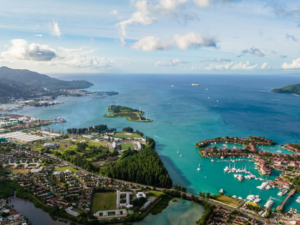
Seychelles, Mauritius, and Egypt hold the top three spots for the third year running. They are not just among the most popular places to go on holiday, they are also among the best places to invest because they offer good institutions and stability. RMB is candid about the fact that the island nations are not the best fit for every investor (mining etc.) and one would naturally think that an economy the size of South Africa’s ($485.54-billion), with the level of sophisticated financial architecture and strong regulatory environment would make it a more desirable investment destination.
The resilience matrix explains why they punch above their weight. Seychelles is the most vulnerable economy of the thirty-one listed: its trade exceeds its output and most goods are imported. Yet it sits high on resilience, helped by deliberate institution-building which included the world’s first sovereign “blue bond” in 2018.
Mauritius records the highest resilience score off the back of a fifty-year shift from sugar monoculture into finance, tourism, ICT and manufacturing. The report calls this the “Singapore Paradox”: a vulnerable economy that excels anyway because it has fortified itself.
Morocco Overtakes South Africa
This year Morocco climbs up to fourth, with South Africa dropping to fifth. How does an economy less than half the size of South Africa’s get there? Simply put: momentum. South Africa’s nominal GDP came in over $400-billion in 2025, but Morocco’s economy grew by 4.9% against a paltry 1.1%, and the gap widens once inflation is factored in. Moroccan inflation stayed below 3% from 2024 to mid-2026, while South Africa averaged 5% over the five years to the middle of this year.
This matters to investors. In the report’s words: “Lower and more stable prices have reduced borrowing costs, preserved household purchasing power, and provided investors with a more predictable operating environment.”
Morocco’s rise is a reflection of the work it has put into industrialisation, diversifying exports and investing in infrastructure, says RMB. The north African country has emerged as one of the continent’s leading manufacturing hubs, with automotive manufacturing playing a major role. Renault and Stellantis anchor a car industry that produced 501 965 vehicles in 2025 (South Africa produced 618 077), or 40.8% of Africa’s total, and the African Development Bank’s industrialisation index now ranks Morocco ahead of South Africa.
Foreign direct investment roughly tripled from its 2023 low to $3.3-billion in 2025. Plus, Morocco hasn’t had to deal with electricity and logistics crises like South Africa.
RMB is clear that this is no catastrophe for South Africa. It “remains among the continent’s most attractive investment destinations and continues to benefit from deep financial markets, improving energy security, and reform momentum, but slower growth has seen it narrowly lose ground this year.”
Since the start of the new administration, there are bright spots here and there: South Africa was removed from the Financial Action Task Force’s grey list last year; has gone well over a year without loadshedding; and Fitch delivered the country’s first upgrade in two decades.
For Nigeria there is good news after going through what the report describes as “tough medicine”, with a seven-place leap to 11th. Côte d’Ivoire has gone up from 16th to 7th in the last two years, with 6.5% growth in 2025, inflation averaging 0.1%, and a new offshore oil and gas sector. Senegal unfortunately went the other way, from 8th to 19th.
The new matrix sorts the thirty-one economies into four archetypes with geographic names. Plateaus, high resilience and low vulnerability, hold countries such as South Africa, Morocco, Algeria and Rwanda. Rift Walls, strong but always under strain, include Seychelles, Mauritius and Botswana.
Basins, sheltered but shallow, include Kenya, Tanzania and Zimbabwe. For them, sustained reform could move them into the Plateau quadrant. Floodplains, exposed with thin defences, include the DRC, Mozambique and Nigeria.
“The central message of this year’s report is ultimately an optimistic one. Africa remains home to some of the world’s fastest-growing economies, youngest populations and most
significant untapped opportunities. But the continent’s success will be increasingly determined by resilience rather than aspiration alone.”
Sources: Where to Invest in Africa 2026/27 report | StatsSA