By Jessie Taylor
2026 Local Government Elections: A Guide To casting Your Vote
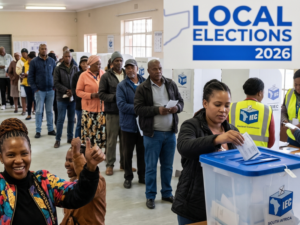
South Africans will head to the polls on 4 November 2026 to choose the councils that will govern their municipalities for the next five years. Local government elections can sometimes receive less attention than national polls, but they have a direct impact on many of the services people rely on every day, from water and sanitation to waste collection, local roads and electricity.
Election Day has been declared a public holiday, and voting stations will be open from 7am to 9pm. Voters already in the queue at 9pm will still be allowed to vote. The IEC has also scheduled special voting for Monday, 2 November and Tuesday, 3 November, for approved applicants.
What Are You Voting For?
Local government is the sphere of government closest to communities. While the national government makes laws and sets policy for the country, and provinces have responsibilities such as healthcare and education, municipalities are responsible for a range of services that directly affect daily life.Depending on where you live, these can include water and sanitation, electricity distribution, refuse removal, local roads, municipal planning and other community services.
In local government elections, voters therefore choose councillors who will form the municipal council responsible for governing their area. South Africa has eight metropolitan municipalities, 44 district municipalities and 205 local municipalities. There are 10,526 council seats being contested in 2026.
How Many Ballots Will You Receive?
If you live in a metropolitan municipality such as Cape Town, Johannesburg, Tshwane, eThekwini or Ekurhuleni, you will receive two ballots. The first is the ward ballot, where you choose a candidate to represent your ward. The second is the proportional representation (PR) ballot, where you vote for a political party. These votes determine how the remaining council seats are allocated so that the council’s composition broadly reflects the parties’ share of the vote.
Voters outside metropolitan municipalities receive a third ballot for their district municipality. The district council operates across several local municipalities and is responsible for certain services and functions at that broader level. The distinction is important because you are not simply voting for a mayor. Voters elect councillors, and the newly constituted council then elects the mayor and speaker. Where no party wins an outright majority, parties may need to work together in a coalition to elect them.
The IEC has certified 136,790 candidates for the 2026 elections, a substantial increase from the 95,427 candidates certified for the 2021 local government elections. The number of contestants means some voters will face particularly long ballots.
Who Can Vote?
You must be a South African citizen aged 18 or older and registered on the voters’ roll. You must be registered in the voting district where you ordinarily reside and can only vote at the voting station where you are registered. The voters’ roll is closed, so anyone who is not currently registered cannot register in time for these elections.
You must have a valid South African identity document when you vote. The IEC accepts the green barcoded ID book, Smartcard ID or a valid Temporary Identity Certificate.
What Happens After The Votes Are Cast?
After voting stations close, ballots are counted, and the IEC captures and collates the results. The Commission’s results system is being independently tested and audited ahead of the election, with political parties also given opportunities to assess it.
The Constitution requires the IEC to declare municipal election results within seven days.
Once the results are finalised, the successful councillors take their seats and councils are constituted. Councillors then elect mayors and speakers, with coalition negotiations possible where no party has an outright majority. The result is therefore only the beginning of the next stage of local government.
Why Does Your Vote Matter?
Local government is where democracy becomes particularly tangible. A national election determines who governs the country, but municipal councils make decisions that can affect whether refuse is collected, how local infrastructure is maintained, how municipal budgets are spent and how communities engage with their local government.
The 2026 election also comes at a time when voter participation is an important issue. Voter turnout has declined significantly over successive elections, reaching a record low of 58.6% of registered voters in the 2024 national and provincial elections. For voters, participating is more than choosing a political party. It is an opportunity to make an informed decision about the people who will represent their communities for the next five years.
Sources: Daily Maverick | Electoral Commission of South Africa (IEC) | South African Government | SA News | The Citizen